
那年夏天你去了哪里
정청래, '대법관 공백 방지법' 준비..."퇴임 1개월 전 후임 제청토록"_我的网站

A |
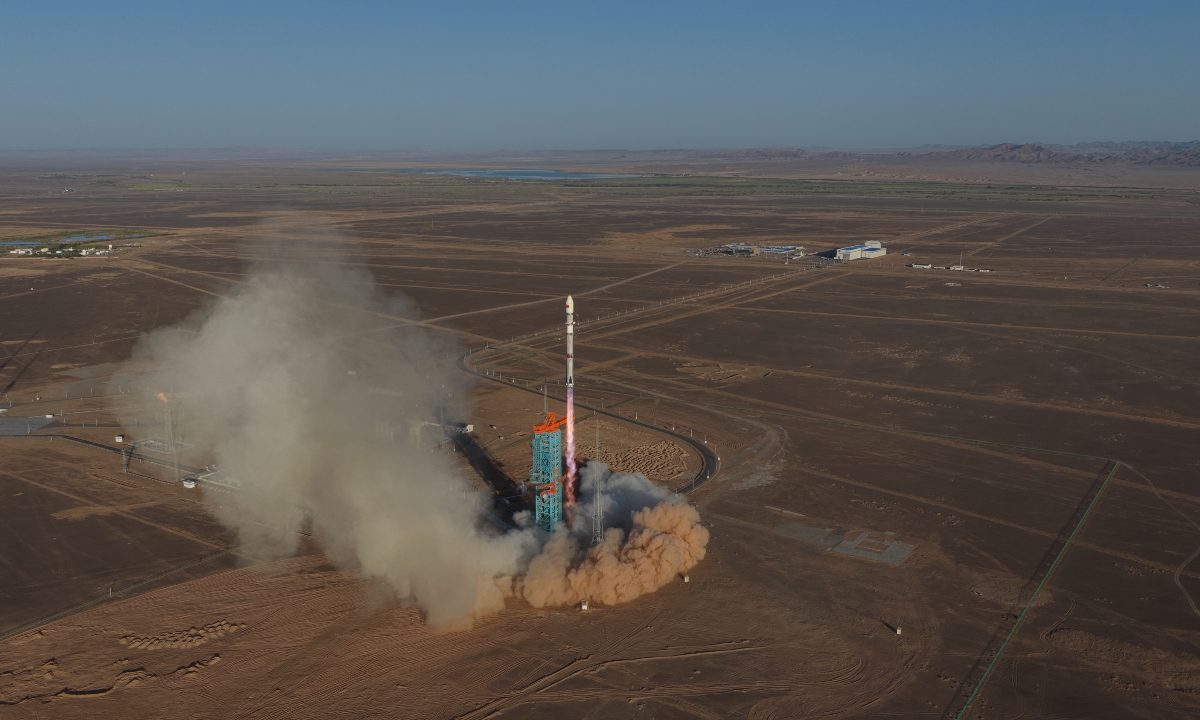
A rocket that once would have been discarded after completing its mission has now taken a different path - returning from the edge of space back to Earth. In the early hours on Wednesday, the Zhuque-3 Y2 reusable launch vehicle lifted off for a flight test, carrying not only a satellite payload but also a major test of China's emerging reusable rocket capabilities. After completing its orbital mission, the rocket's first stage attempted a controlled return and recovery, with its developers Beijing-based private firm LandSpace describing the mission as a key transition from technology verification toward engineering application for China's commercial aerospace industry.
About 137 seconds after liftoff, the rocket’s first and second stages separated. The second stage continued its flight and successfully placed the Honghu-03 satellite, independently developed by Hongqing Technology, into its designated orbit. And at around 7:43 am, the rocket’s first stage successfully made a soft landing as planned at the Zhuque-3 landing site in Minqin county, Northwest China’s Gansu Province, marking the successful completion of the flight test mission.
This mission marked China's first-ever recovery of a launch vehicle's first stage using landing legs, as well as the country's first land-based recovery of the first stage of an orbital-class launch vehicle, the developer highlighted.
The achievement came shortly after China's Long March-10B reusable rocket successfully completed its maiden flight and a sea-based recovery test on July 10, marking a wave of breakthroughs in reusable launch technology. The parallel progress of state-owned and private aerospace players through different technical approaches is creating a dual-track development landscape for China's future low-cost and high-frequency space transportation, some aerospace experts told the Global Times.
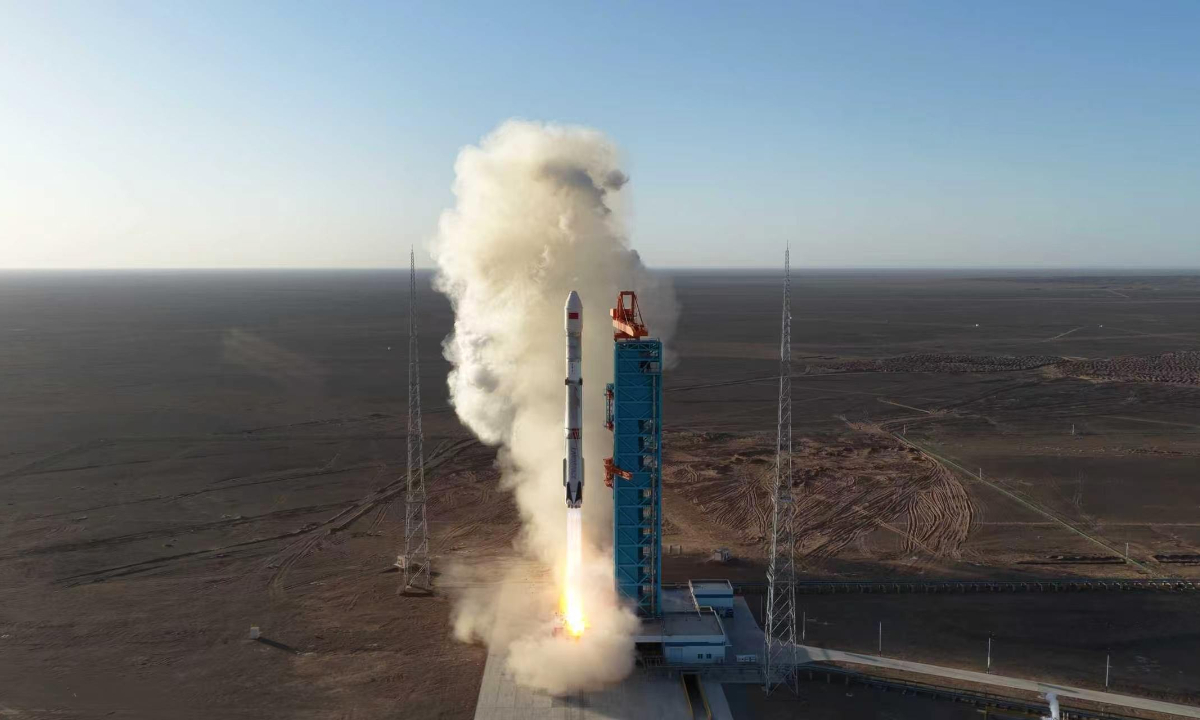
Unlike traditional expendable rockets, which are discarded after a single mission, reusable launch vehicles are designed around an entirely different concept: a rocket should not only complete a launch, but also return safely and be prepared for future missions.
According to LandSpace, for conventional expendable liquid launch vehicles, the rocket itself represents the majority of launch costs, while fuel expenses generally account for only 1-3 percent. The first stage typically makes up about 70 percent of the total rocket cost. As a result, repeated reuse of rockets - particularly the first stage - can significantly lower launch costs by amortizing the cost of the vehicle over multiple missions. For partially reusable rockets that reuse the first stage while discarding the second stage, the cost advantage becomes increasingly evident as the number of reuse cycles grows.
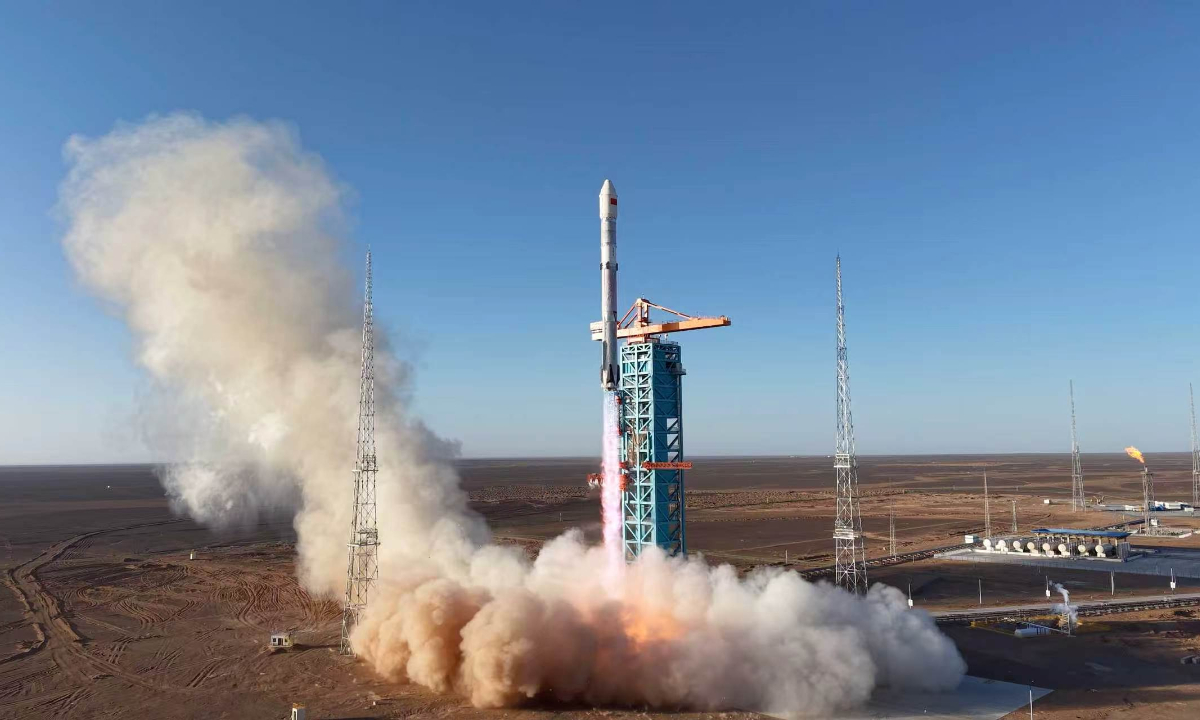
The Zhuque-3 is a reusable liquid oxygen-methane launch vehicle independently developed by Beijing-based private aerospace firm LandSpace for future large satellite constellation deployment missions, according to the company's statement.
The rocket adopts a two-stage configuration, with a diameter of 4.5 meters, a total length of 66.1 meters and a liftoff mass of about 570 tons. Its first stage is equipped with nine Tianque-12A liquid oxygen-methane engines, as well as recovery systems including grid fins, attitude control systems and landing legs, enabling autonomous return and soft landing after orbital missions, LandSpace said.
The Y2 mission was conducted on the basis of experience accumulated from the previous flight test, with improvements focused on recovery reliability, flight control and engine performance.
LandSpace said it optimized the first-stage landing propulsion scheme by reducing the number of engines used during landing ignition, simplifying system design and improving reliability during the recovery phase. The company also added an autonomous safety control function capable of predicting landing points based on flight conditions and making corresponding safety adjustments.
The mission also further verified key technologies including the use of stainless-steel rocket structures, liquid oxygen-methane propulsion and landing-leg recovery systems.
According to LandSpace, stainless steel provides advantages in manufacturing cost, processing efficiency, high- and low-temperature performance and post-recovery maintenance, making it suitable for reusable rocket development.
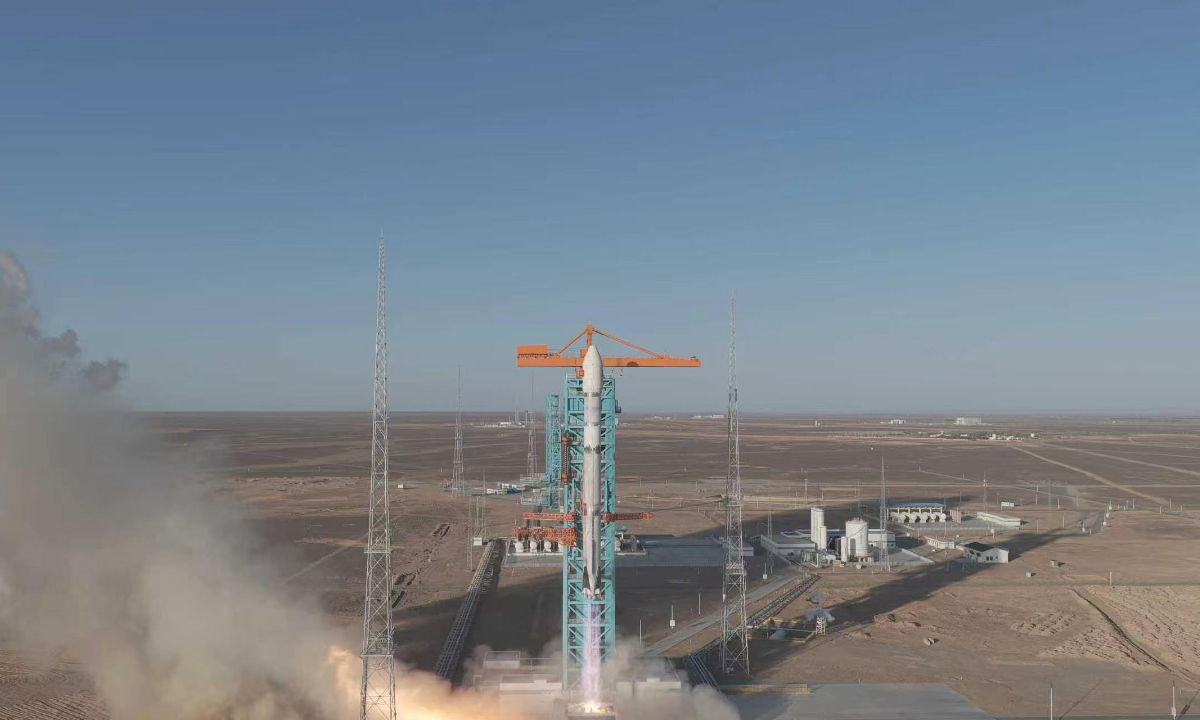
The significance of Zhuque-3 Y2 extends beyond one flight test, as it reflects China's broader effort to develop reusable launch systems through multiple technological routes, according to Chinese experts.
Kang Guohua, a senior member of the Chinese Society of Astronautics and a professor of aerospace engineering at Nanjing University of Aeronautics and Astronautics, told the Global Times that China has become the second country after the US to develop orbital-class rocket recovery capabilities.
The US currently leads reusable rocket development, with SpaceX and Blue Origin advancing different recovery technologies. China, meanwhile, has seen both state-owned aerospace programs and private companies explore different technical pathways, creating a diversified development pattern, Kang said.
According to Kang, the parallel development of different approaches demonstrates the advantages of combining national strategic capabilities with market-driven innovation.
Pang Zhihao, a prominent Chinese space exploration expert and retired researcher from the China Academy of Spacecraft Technology, told the Global Times that the successful recovery of Zhuque-3 would carry special significance for China's private aerospace sector.
A landing-leg recovery approach would mean that private aerospace companies have completed the full process of developing a large-capacity reusable rocket system, validating key technologies including stainless-steel structures, multi-engine propulsion and recovery systems, Pang said.
More to expect
LandSpace said the first stage represents a significant share of the total cost of a liquid launch vehicle. Through repeated reuse, the cost of each launch can be gradually reduced, while production cycles can be shortened and launch frequency increased.
Such capabilities are becoming increasingly important as countries and companies accelerate the deployment of large low Earth orbit satellite constellations, it added.
The Zhuque-3 has demonstrated the ability to support various commercial missions, including satellite constellation deployment, single satellite launches and rideshare missions, according to LandSpace.
The company said the rocket has achieved a maximum orbital payload capacity of 14.2 tons in expendable mode, while its reusable configuration is designed to support future constellation deployment needs.
The Y2 mission also carried the Honghu-03 satellite developed by Hongqing Technology, combining reusable technology verification with a commercial launch application scenario. LandSpace said the mission verified the full chain of "design, manufacturing, testing, launch and recovery," laying the foundation for future commercial operations.
The Zhuque-3 Y2 test comes as China's aerospace industry accelerates efforts to develop reusable launch vehicles.
According to Chinese experts, multiple companies are now exploring different recovery technologies, including vertical landing and other innovative approaches, reflecting the rapid growth of China's commercial aerospace ecosystem.
Reusable liquid launch vehicle, Pallas-1 will begin its mission from Galactic Energy's independently built facility at the Dongfeng Commercial Aerospace Innovation Test Zone in northwestern China, where the company will soon complete testing, propellant filling and launch preparation operations, according to its developer Galactic Energy on Thursday.
Orienspace's Gravity-2 reusable large liquid launch vehicle is undergoing final ground testing ahead of its maiden flight, which is scheduled in the fourth quarter of 2026. The rocket is designed with a low Earth orbit payload capacity of 21.5 tons.
Space Pioneer is advancing verification and joint testing of its Yuanxingzhe-1 (YXZ-1) rocket, while i-Space's Hyperbola-3 reusable rocket has completed full-cycle ground verification of offshore recovery and landing technologies and is expected to conduct its maiden flight around the end of 2026.
Meanwhile, CAS Space's reusable Lihong-2 vehicle is being developed as a platform for verifying key recovery and reuse technologies, as well as conducting microgravity experiments. The vehicle is scheduled to complete its maiden flight and 100-kilometer-class recovery verification test in 2026.
Pang said reusable rocket technology could help lower launch costs, increase mission frequency and provide stronger support for emerging sectors such as satellite internet, space-based information networks and future large-scale space applications.
For China's private space sector, the Zhuque-3 Y2 mission represents a transition from technology verification toward engineering application, according to LandSpace. The company said it aims to further build a "launch-recovery-inspection-reuse" cycle to support future high-frequency and low-cost commercial operations.
Experts said reusable rocket technology could help reduce launch costs, increase launch frequency and provide stronger support for emerging sectors such as satellite internet and large-scale space applications.
The future challenge for China's reusable rocket developers will be turning successful flight tests into repeatable commercial operations, as the country advances toward a new era of high-frequency space transportation, they noted.
。 [the300] [서울=뉴시스] 정병혁 기자 = 정청래 더불어민주당 의원이 19일 서울 여의도 국회에서 열린 외교통일위원회 전체회의에서 인사말을 하고 있다. 2026.08.19. [email protected] /사진=정병혁정청래 더불어민주당 의원이 대법관 공백 사태를 방지하기 위한 법안을 준비 중인 것으로 확인됐다. 최근 조희대 대법원장이 5개월여 간의 대법관 공백 사태 끝에 대법관 후보자를 서면 제청하면서 청와대와 대법원 간의 갈등이 고조된 바 있다.26일 정치권에 따르면 정 의원은 대법관이 퇴임하기 1개월 전까지 후임 대법관 제청을 마쳐야 한다는 내용을 담은 법원조직법 개정안 발의를 준비하고 있다. 현재 공동 발의자 서명을 받고 있으며 최민희·한민수·문정복·권향엽·김영환 등 친청계(친정청래계) 의원들이 이름을 올린 것으로 알려졌다. 정 의원은 이날 머니투데이the300과 만나 "조희대 (대법원장) 사태도 있고 이전부터 준비해왔던 내용"이라며 "대법관 증원도 예정돼있는데 공백이 있으면 안 되지 않겠냐"고 발의 취지를 설명했다. 대법관 증원법에 따라 대법관 수는 2028년부터 2030년까지 매년 4명씩 늘어 모두 12명이 늘어난다.앞서 조 대법원장은 노태악 전 대법관 퇴임 이후 약 5개월이 지나 새 대법관 후보자로 손봉기 대구지방법원 부장판사와 김성수 서울고등법원 부장판사를 이재명 대통령에 임명 제청했다. 통상 대법원장은 대통령을 직접 만나 제청하고 만남 전에는 청와대와 법원행정처의 제청 후보 조율이 이뤄진다. 이번의 경우 서면으로 제청이 이뤄졌다. 김 부장판사에 대해선 청와대와 법원행정처 사이에 사전 협의가 있었으나 손 부장판사에 대해서는 사전 협의마저 없던 것으로 전해진다.이를 두고 민주당에선 "이 대통령을 무시하는 것은 국민과 헌법을 무시하는 것"이라며 "탄핵 이유가 하나 더 늘었다"는 반발이 터져 나왔다. 다만 김민석 대표 등 당 지도부는 국민적 공감대가 아직 형성되지 않았기 때문에 조 대법원장에 대한 탄핵 소추를 감행하는 것은 적절하지 않다는 분위기다.。
Current article:http://07ditla.senchuoshaozaodidia.shop/list_7a634l/hcof.html
Published on:04:19:24
我的网站相关内容
 恭喜快船!恭喜伦纳德!阴阳合同调查出有利新结果!
 哈滕谈多特离队:这就是生意 东契奇都能被交易
 和谐共生 | 鱼能洄游、人能散步!解锁南河枢纽生态小巧思
 海盗船释放了第一批散热硅脂:氧化锌材料,据说已经有好几年不存在了。
 江苏南京:福彩助残站点铺就残疾人就业路
 网络爆火“骑行四件套”,你中招了吗
- ·Gorakhpur Accident: नशे में ट्रक चालक ने ऑटो और बाइक सवारों को मारी टक्कर, नौ घायल
- ·Steam的“技术支持:未知错误”:作为一个程序员既可以是积极的也可以是邪恶的
- ·官方通报广西桂平一船舶失控漂流:已安全停泊,无人员伤亡
- ·特斯拉Model Y正向全球畅销车排行榜首位攀升
- ·Parineeti Chopra shares unseen BTS moments from Amar Singh Chamkila in new vlog
- ·Black Pregnancy Dangers, Deaths Seen as a ‘Completely Preventable’ Health Crisis
- ·新形式的华硕Rog笔记本:不同的体验
- ·俄罗斯不再反对,中亚传来重大好消息:中吉乌铁路10月开工
我的网站最新内容
- ·中日英联手抛售美债,特朗普威胁出动美军“救市”,王雨田观察,原创 中日英联手抛售美债,特朗普威胁出动美军“救市”
- ·उत्तराखंड में शिक्षकों को अंतरिम पदोन्नति का तोहफा, शिक्षा मंत्री के अधिकारियों को जारी किए निर्देश
- ·微软发布了Windows7补丁KB4487345,修复了1月份更新的网络/激活问题。
- ·活力中国调研行丨福建:特色产业“链”上新文旅,活力中国调研行丨福建:特色产业“链”上新文旅
- ·熊猫雪地里给自己滚成元宵了
- ·“洪水爆发后才放上几个沙袋”,美财长最新努力失败了!
- ·福州港整车出口首破5万辆 单船出口6115辆刷新福建纪录
- ·서울시, 9월 수도요금 체납 집중정리…55억 규모
- ·महिलाओं के लिए सबसे अनसेफ है दिल्ली, जयपुर और रांची, मुंबई पर भरोसा अब भी बरकरार; रिपोर्ट में चौंकाने वाले खुलासे
- ·Dormabene马标寝具助力中国万水千帆赛安庆站圆满落幕!
- ·首次外访选择基辅,伯纳姆力挺泽连斯基,救乌克兰就是救英国,尖锋视野,原创 首次外访选择基辅,伯纳姆力挺泽连斯基,救乌克兰就是救英国
- ·美方拿仲裁书施压逼中国认栽,中国三箭齐发回应,最坏情况下的应对方案已经摆在台面上,欣荣谈星座,原创 美方拿仲裁书施压逼中国认栽,中国三箭齐发回应,最坏情况下的应对方案已经摆在台面上
- ·疑电池爆炸烧屋邻居施援手 青年竟拒逃生
- ·“滁河2026年第1号洪水”形成
- ·老挝水电首经中老500千伏通道送达粤港澳大湾区
- ·Gay and targeted in Uganda: Inside the extreme crackdown on LGBTQ rights
我的网站热点内容
- ·Retired Chinese cultural planner produces global acclaimed documentaries on Chinese railroad workers in U.S. using AI
- ·两度领先惨遭翻盘!郑钦文又输了
- ·普理查德休赛期专攻造犯规 通过脚步优化博罚球
- ·超节点背后,国产AI芯片正在重写竞争规则
- ·秦皇岛经开区发展能级持续跃升
- ·F1荷兰站:维斯塔潘主场谢幕战上墙退赛 诺里斯夺冠两连胜
- ·嘉元科技:2026年上半年净利润3.82亿元,同比增长940.00%
- ·Yangtze River Delta launches multimodal express freight routes to Beijing-Tianjin-Hebei region
- ·挑战PD-L1“药王”成功!国产创新药赛道又迎重要催化
- ·强生:IMAAVY获FDA批准用于治疗罕见血液疾病
- ·Photos: Algeria Celebrates 60 Years Since Winning Independence From France
- ·三峰环境:上半年净利润6.6亿元 同比下降2.65%
- ·大阪マラソン出場の20歳人気アイドル ラスト1キロで救急搬送「脱水症状で意識なくなり、そのまま救急車で」と報告
- ·超100款新车砸向市场!现代汽车公布史上最大产品投放计划
- ·建昌县开展消防安全隐患自检自查活动
- ·中国体育圈趋向团结一致,都集体慢慢向中国足球对齐了!