
蒲松龄
宝马计划重启增程动力系统 网传第六代宝马X5或将首发搭载_我的网站

一 |
[ 资讯] 日前,知情人士Greg Kable称,宝马正计划重启增程动力系统(REx),首款搭载该系统的车型为即将推出的第六代X5,第六代X3及2026年推出的第二代X7也在评估适配可行性。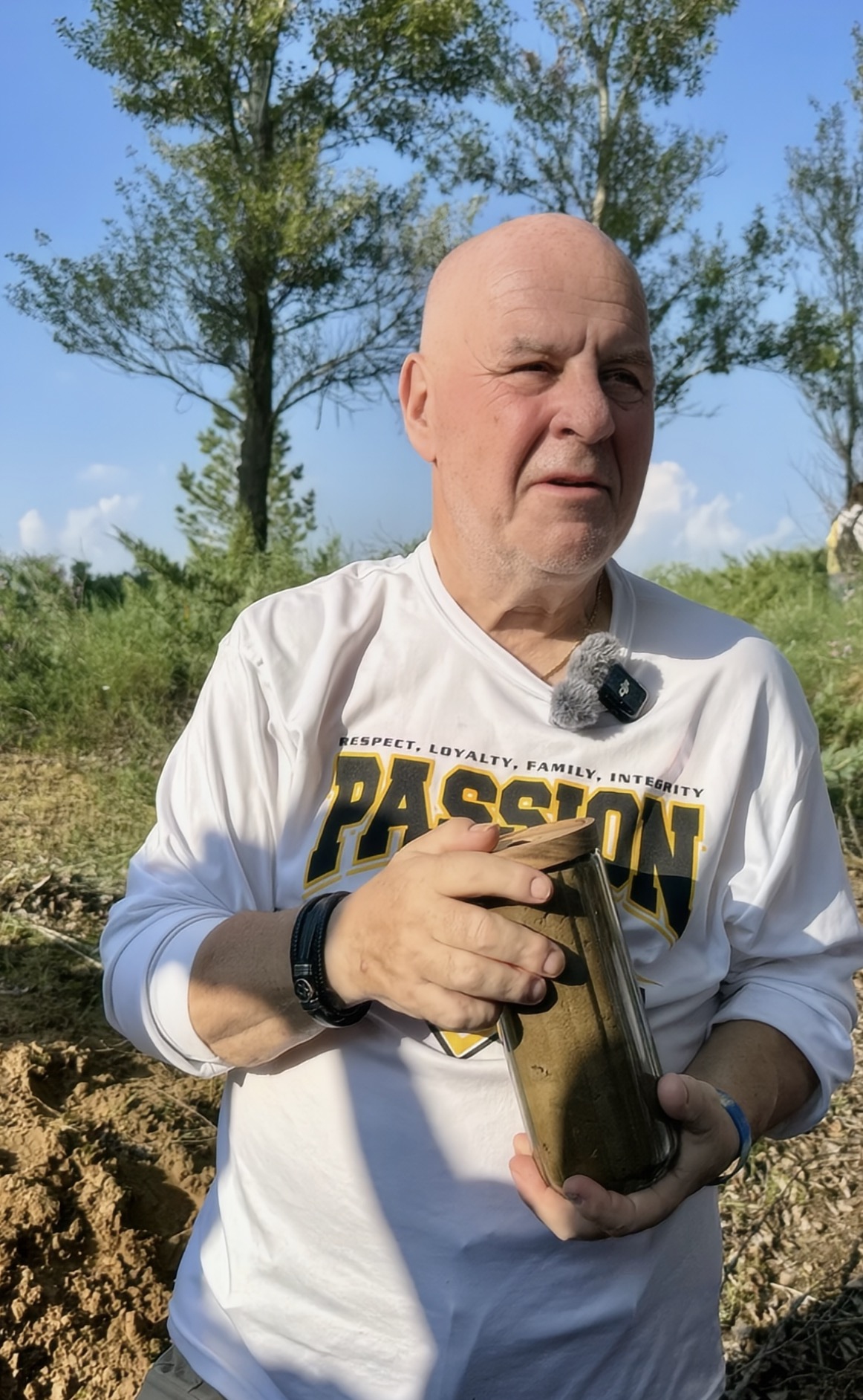
On Monday afternoon, Ronald Sakolsky, an American teacher, set foot once again on the soil of the Mu Us Desert, in the Uxin Banner of Ordos, North China’s Inner Mongolia Autonomous Region. He first came here in 2000. Back then, the land was little more than drifting sand. Today, it is green with trees – a transformation driven by decades of local effort.
He stood within Sakolsky Forest, a woodland formally named to honor his early donation toward local ecological restoration. There, he carried out a plan he had held long before this trip: filling a jar with sand from the desert to bring home to the US.
More than two decades ago, sand was the one thing this place had in abundance. In 1999, when Sakolsky arrived in China as a participant in a bilateral teacher exchange program, he was moved by the tireless efforts of Chinese desert fighter Yin Yuzhen and her husband to curb desertification in the Mu Us Desert. He raised $5,000 – equivalent in 1999 to three years of income for Yin’s entire family – to fund their local tree-planting initiative.
The young saplings bought with that donation have since matured into more than 50,000 full-grown trees, transforming the once desolate, sandy wasteland into a thriving green landscape.
When Sakolsky met Yin at the airport on Sunday, 26 years after his first visit to Inner Mongolia, he joked that he could not take a tree from the Mu Us Desert, but he could slip some sand into his shoes and carry a piece of the land back with him. Now, he had found exactly the sand he wanted – not just any sand, but from a place where persistence had turned desert into life, and where his own name had become part of that story.
“Promise is a promise,” he said. “Ms. Yin made a promise, and she fulfilled it.”
For Sakolsky, the sand is not just dirt. It is a metaphor, a bridge, a shared ground. He plans to tell his grandchildren what it means. “It’s not just a piece of sand in the jar,” he said. “It’s a jar of love.”
He used the jar of sand to symbolize that America and China share a relationship rooted in the same soil. He shook the jar, holding its two ends as if they were the two countries, and said that it shows we’re all on the same planet.
There is an old American joke, he noted, that if you dig a hole deep enough, you will eventually reach China. “We’re all on the same planet,” he said.
Earlier that day, while visiting Yin’s home, he spoke about the need for Americans and Chinese to see each other as family. “All Americans should understand that Chinese people and Americans can be family,” he said. “We can transcend differences if we focus on our common ground. We all love our countries, and we all value loyalty and respect – these are the shared virtues we hold dear.”
As for the sand he collected, Sakolsky said he would treat it as a treasure, alongside all his other precious keepsakes from China. He expects to display it in his living room – a daily reminder of the forest that carries his name and the people who made it grow.
。
。
二 |
On Monday afternoon, Ronald Sakolsky, an American teacher, set foot once again on the soil of the Mu Us Desert, in the Uxin Banner of Ordos, North China’s Inner Mongolia Autonomous Region. He first came here in 2000. Back then, the land was little more than drifting sand. Today, it is green with trees – a transformation driven by decades of local effort.
He stood within Sakolsky Forest, a woodland formally named to honor his early donation toward local ecological restoration. There, he carried out a plan he had held long before this trip: filling a jar with sand from the desert to bring home to the US.
More than two decades ago, sand was the one thing this place had in abundance. In 1999, when Sakolsky arrived in China as a participant in a bilateral teacher exchange program, he was moved by the tireless efforts of Chinese desert fighter Yin Yuzhen and her husband to curb desertification in the Mu Us Desert. He raised $5,000 – equivalent in 1999 to three years of income for Yin’s entire family – to fund their local tree-planting initiative.
The young saplings bought with that donation have since matured into more than 50,000 full-grown trees, transforming the once desolate, sandy wasteland into a thriving green landscape.
When Sakolsky met Yin at the airport on Sunday, 26 years after his first visit to Inner Mongolia, he joked that he could not take a tree from the Mu Us Desert, but he could slip some sand into his shoes and carry a piece of the land back with him. Now, he had found exactly the sand he wanted – not just any sand, but from a place where persistence had turned desert into life, and where his own name had become part of that story.
“Promise is a promise,” he said. “Ms. Yin made a promise, and she fulfilled it.”
For Sakolsky, the sand is not just dirt. It is a metaphor, a bridge, a shared ground. He plans to tell his grandchildren what it means. “It’s not just a piece of sand in the jar,” he said. “It’s a jar of love.”
He used the jar of sand to symbolize that America and China share a relationship rooted in the same soil. He shook the jar, holding its two ends as if they were the two countries, and said that it shows we’re all on the same planet.
There is an old American joke, he noted, that if you dig a hole deep enough, you will eventually reach China. “We’re all on the same planet,” he said.
Earlier that day, while visiting Yin’s home, he spoke about the need for Americans and Chinese to see each other as family. “All Americans should understand that Chinese people and Americans can be family,” he said. “We can transcend differences if we focus on our common ground. We all love our countries, and we all value loyalty and respect – these are the shared virtues we hold dear.”
As for the sand he collected, Sakolsky said he would treat it as a treasure, alongside all his other precious keepsakes from China. He expects to display it in his living room – a daily reminder of the forest that carries his name and the people who made it grow.
。

三 |
第六代宝马X5谍照
第六代宝马X5谍照
此次开发由宝马与长期合作伙伴采埃孚(ZF)共同推进,旨在应对全球部分市场充电基础设施不足、消费者对纯电车型存顾虑的现状。有媒体解读认为,中国作为宝马最大单一市场,而理想汽车在增程领域的崛起,是宝马重启增程动力的重要因素之一。宝马i3 REx
宝马曾于2013年在i3 REx车型上推出增程版本(搭载两缸汽油机作为增程器),2018年该车型停产后相关技术未再应用于其他车型。此次重启,宝马将采用ZF新开发的eRE/eRE+增程架构,其中eRE+配备离合器和差速器,可同时作为发电机和辅助驱动源,配套的燃油发动机功率范围为148-201马力。系统将结合宝马第六代800V电动架构及与宁德时代合作开发的NMC圆柱电池技术,预计纯电续航超1000公里(CLTC标准),且能量管理策略针对增程模式下发动机持续充电的特性重新设计。
四 |
氢动力iX5
值得关注的是,宝马氢动力车型iX5的技术架构为增程系统提供了参考——动力单元与车轮无机械连接,仅通过发电机为电池供电驱动电机。尽管宝马CEO齐普策此前认为增程系统“成本过高”,但面对市场变化,宝马正重新评估其商业价值,目前董事会已进入量产前的最终规格审核阶段。
五 | (信源/AUTOCAR Greg Kable;文/ 岳长兴)
Current article:http://07ditla.senchuoshaozaodidia.shop/list_4k8pb/eklol.html
Published on:18:45:17
相关新闻
- 商汤WAIC发布交付级AI全栈:模型、算力、机器人三线并进
- 农业法修订草案二审 拟完善农民权益保护
- 拼多多平台海纳家用电器海尔授权作假,发残次品
- 厦门入选最具国际传播影响力城市
- Naadam festival in Inner Mongolia draws over 200,000 visitors
- 推动人工智能技术更加有力驱动加快建设交通强国
- 台民调乱象丛生尽显政治算计_参选人_公司
- 索尼抱着《血源》有钱不赚?宫崎英高你早说《黄昏血族》是多人啊!
- Weather Update: दिल्ली-NCR में अभी नहीं थमेगी बारिश, कैसा रहेगा यूपी-बिहार समेत बाकी राज्यों का हाल?
- 梅开二度,重庆铜梁龙队长向余望当选中甲第4轮最佳球员
最后更新
- Kansas Voters Reject Amendment to Strip Abortion Rights From State Constitution By Nearly 2-1 Margin
- 腾讯联合拳头公司成立腾津体育
- 海峡两岸客家山歌对唱交流晚会在广东梅州举行
- 美智库高管眼红“一带一路”:我讨厌它,因为这绝妙的构想不是美国提出的
- 50人!事业单位,公开招聘
- 神鬼寓言4:在看完完整的任务演示后,我已迫不及待想玩到它 | 2026年科隆游戏展
- 安徽水上乐园设计厂家口碑推荐:如何避开同质化陷阱,打造区域标杆项目
- 四名丰盛湾青少年开着从罗托鲁瓦偷的车,被奥克兰警方追捕
- “亵渎DC角色的垃圾宇宙”——《灯侠》第一集结局令大量绿灯侠粉丝感到不满
- 巴雷拉:我们确实很疲劳但我们不找借口,要努力做到最好
热门新闻
- Rise in violent incidents at NCR condos
- 三星Note 8 Android Pie Beta更新支持夜间模式
- 杭州这轮雨要下到什么时候?
- 苹果homepod国家版:我的耳朵被它宠坏了
- 马斯克计划明年发射AI卫星!相关概念股梳理
- ‘G7 Is Irrelevant’: 'Global South' Holds West Responsible For Ukraine Crisis, Says Think-Tank Chief
- 多部门“五进”宣传齐上阵
- 苹果 iOS 16 正式版推送:全新自定义锁屏、iMessage编辑撤销等_屏幕_锁定
- 首条跨京冀城市轨道交通线路开启空载试运行,首条跨京冀城市轨道交通线路开启空载试运行
- 打造8系旗舰新标杆,魏牌V8X以极致“诚意”回应家庭品质出行期待